The Bench Beside the Wall: Four Conversations That Turned a Churchyard Into a Neighbourhood
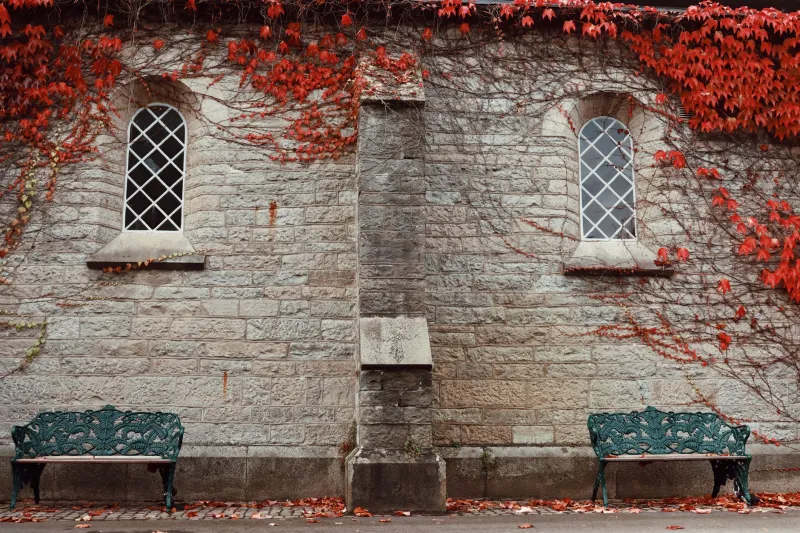
The bench is not much to look at. It sits against the north wall of St Margaret's churchyard, facing the path rather than the building, its slats softened by years of rain and coats. There is no plaque, no dedication, no small sign asking anyone to remember a name. And yet, from just after seven most mornings, it is one of the busiest pieces of furniture on the whole site.
Over the past few weeks, we have spent time nearby: not interviewing, exactly, more listening in the way you listen when you are pretending to read a noticeboard. Four people use that bench with a regularity that amounts to a kind of quiet membership. They do not come to services. They would not describe themselves as part of the congregation. But they have made the churchyard their own, and in doing so they have taught us more about welcome than any welcome team training session ever could.
Names have been changed, because the point is not who they are. The point is what a bench can do.
The Widower Who Arrives Before the Birds
Frank is 78 and comes at about quarter past seven, whatever the weather. He brings a flask, a folded newspaper and a small cushion he keeps in a battered holdall. He sits on the left-hand side of the bench, nearest the wall, and stays for an hour. Sometimes he reads. Sometimes he does not.
His wife, Joan, died four years ago. They were married for 52 years. He told us that the churchyard is not a sad place for him. It is simply where he can be quiet with her without a queue of sympathy and without having to explain anything to anyone.
He does not come inside the church. He has been in once, for a funeral, and said it was beautiful but that he felt like a visitor in someone else's front room. The bench is enough. It gives him a place to sit inside the setting without having to negotiate the threshold.
What we learned: welcome is not always a pew. Sometimes it is a bit of wood against a wall, kept dry and kept free.
The Nurse Who Needs the In-Between
Aisha is 31 and works nights at a hospital across the city. She gets off the 7.15 bus, walks through the churchyard gate and sits for twenty minutes before she goes home to sleep. She is not unfriendly, but she is not there for conversation. She is there for green, for pigeons, for the sound of a leaf blower starting up somewhere beyond the hedge.
One morning she fell asleep for a moment, her head tipping sideways. A funeral crew began setting out chairs, and before anyone could ask her to move, she was up and gone with a quiet apology. It happened again the following week. By the third time, one of the grounds volunteers had started leaving the far gate open so she could slip out without crossing the main path.
Nobody organised this. It was simply that someone noticed.
What we learned: a churchyard is not only for the people who arrive with a purpose. It is also for the people who are in between — between work and rest, between one thing and the next. Making room for them costs very little. It mostly costs attention.
The Student Who Misses Home
Tom is 19 and from Leeds. He is in his first year at a London university and lives in a halls of residence about ten minutes away. He found the churchyard by accident in September, looking for a short cut, and now he sits there with his laptop and calls his mum.
He has not been inside St Margaret's. When we asked why, he said: I don't know the rules. He meant it simply. Do you sit at the front or the back? Do you have to sing? What if you arrive late? Is there a collection plate, and is there a right amount? He said the building looks lovely from the path, but the door is the awkward bit.
One Sunday in October, a member of the clergy walked past and said good morning. That was all. No invitation, no clipboard, no follow-up question about whether he was new. Tom said it was the best thing anyone could have done. He has since looked up the Christmas services and thinks he might come to one.
What we learned: a greeting from a distance can be a form of hospitality. Not every hello needs to be a recruitment conversation.
The Dog Walker Who Knows Everyone
Maureen is 64 and walks Biscuit, a cocker spaniel with no interest in theology, through the churchyard twice a day. She uses it as a cut-through, and has done for years. She knows when the bins go out, which path floods first and which funeral director arrives earliest. She has never been to a service at St Margaret's, but she keeps an eye on the bench.
It was Maureen who noticed Frank's cushion had gone missing one morning and found it behind the hedge. It was Maureen who started carrying spare poo bags and handing them to strangers with a look that was not unkind but was not negotiable. It was Maureen who told us, with some feeling, that the bench needed a coat of wood stain before winter.
She would not call herself a member of the church. And yet she is one of the people who holds the churchyard together.
What we learned: belonging often begins with a repeated route, not a declaration of commitment. The people who walk through a place every day may care for it as much as the people who unlock it on Sundays.
What the Bench Teaches a Congregation
The four of them do not know each other well. Frank nods at Aisha. Maureen asks Tom about his exams. Aisha once gave Frank a square of chocolate without saying anything. Nobody has arranged a coffee morning for them. Nobody has put them on a rota.
That is exactly the point. A public space becomes a neighbourhood through small overlaps, not grand gestures. The bench works because it asks nothing. It is available. It is dry. It is in the right place, facing the path rather than the door.
There are practical things a congregation can take from this. Keep the bench repaired. Do not let the noticeboard block the view. Leave the gate easy to open. Resist the urge to pounce on every person who sits down. If you want to put up a sign, make it simple: this bench is for anyone. Silence, too, is a form of hospitality.
On a grey Thursday in November, we watched the morning shift change. Frank packed up his flask. Aisha walked out through the far gate. Tom appeared with his laptop, and Maureen waved at him from the path. The church doors were open for Open Door, and a warm light came out across the gravel. None of the four went in.
That is fine. The bench is part of the building too. If you are not ready for the door, the wall is still ours to share.