Please Don’t Rush Off: The Quiet Ministry of the Final Ten Minutes at St Margaret’s

Photo: church volunteers stacking chairs after Sunday service warm London church coffee cups, via img.freepik.com
There is a particular sound that fills a church just after a service ends. It is not silence, exactly. It is the soft clatter of hymn books being returned, the squeak of a chair leg on stone, the rustle of coats being pulled from the backs of pews. At St Margaret’s, it usually begins about thirty seconds after the final amen, when everyone seems to remember at once that they have bags, umbrellas and somewhere else to be.
But not everyone leaves straight away. And those ten unhurried minutes — the ones that sit between the closing prayer and the walk back out into London — are doing far more than tidying up.
The service ends, but the gathering doesn’t
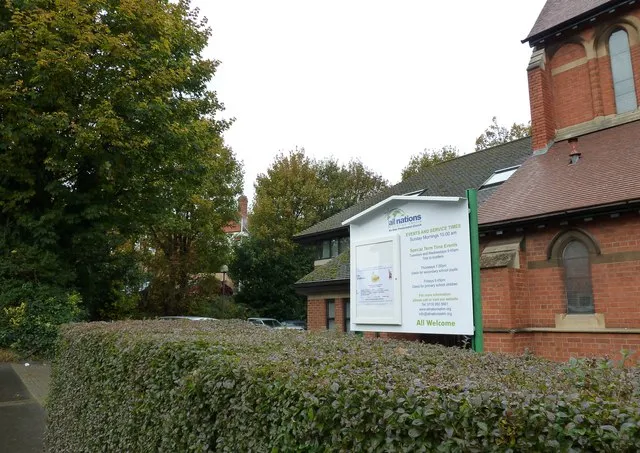
On paper, the service has a clear finish. The blessing is given, the notices have been read, and the organist plays something cheerful enough to move people towards the door. In practice, the ending is a little more like a tide going out. Some people head straight for the bus stop. Others pause by the noticeboard. A few drift towards the coffee table with the air of people who have nowhere more important to be.
That pause is not an accident. It is one of the quiet ways a church becomes a community rather than simply a place people visit on a Sunday. The formal part of the morning may be over, but the informal part — the part where people actually talk to one another — is just beginning.
A liturgy of stacking chairs
If you linger at St Margaret’s after the service, one of the first things you’ll notice is that nobody makes a great fuss about the jobs that need doing. Chairs are gathered and stacked. Cups are carried to the kitchen. Someone checks whether there is milk left for the next pot of coffee. A child is gently persuaded that the kneeler is not a toy.
It would be easy to call this housekeeping. But it is also a kind of welcome. When people do these small tasks together, they are saying, without saying it, that this place belongs to all of us. The newcomer who picks up a stray order of service is not being recruited into a rota. They are simply being handed a way to join in that does not require a speech.
That matters more than we sometimes admit. For anyone who finds churchgoing a bit daunting, the ten minutes after the service can be the easiest part of the morning. There is no pressure to follow the liturgy or find the right page. There is just a stack of chairs and someone saying, “Thanks — that’s a help.”
The last cup of coffee is often the best one
The coffee after the service has its own rhythm. The first rush is busy and slightly chaotic. The second round is calmer. By the time the last cup is poured, people have settled into conversations that would never have happened during the notices.
This is where you hear about the hospital appointment, the grandchild’s first term at school, the neighbour who has been poorly, the holiday that was cancelled, the small triumph that nobody else has asked about. It is not gossip, or not usually. It is the ordinary traffic of friendship. St Margaret’s is a church, yes, but it is also a gathering of Londoners trying to look after one another in a city that can be very good at keeping people apart.
And the last cup of coffee is often the one that matters most. It is the cup someone drinks because they are not quite ready to go home. It is the cup that gives a shy person a reason to stand near a group without having to break into it. It is the cup that turns a quick hello into a proper conversation.
The conversation by the door
Then there is the doorway. At St Margaret’s, the door is not just an exit. It is a sort of threshold where people say the things they did not manage to say earlier. A first-time visitor might be asked, gently, whether they found the service easy to follow. A regular might mention that they will be away next week. Someone might ask after a person who has not been seen for a while.
These conversations are rarely profound. That is exactly why they work. They are small enough to be manageable and specific enough to be real. A church can preach a fine sermon about community, but community is usually built in exchanges that last less than a minute: “Are you on the bus route home?” “Do you need a hand with that?” “I’m glad you came.”
For people who live alone, or who spend most of the week in jobs where they are polite rather than known, those few minutes can be a lifeline. They are not dramatic. They are not a replacement for proper pastoral care. But they are a reminder that someone has noticed you, and that you are expected back.
Why ten minutes can change the week
It is tempting to think that the important part of Sunday happens in the service itself. And of course, for many people, it does. But the ten minutes afterwards do something different. They turn a congregation into a set of relationships. They give people who are new a way in. They give people who are struggling a chance to be seen without having to announce it. They give people who are simply lonely a room to stand in for a little while longer.
That is not a small thing in a city like London. We are very good at rushing here. We are very good at being efficient. We are less good at lingering. A church that makes room for the linger is offering something quietly countercultural: a place where you do not have to be useful, or quick, or on your way.
If you want to stay but aren’t sure how
Plenty of people would like to stay after the service but feel awkward about it. You may not know where to put yourself. You may not want to interrupt. You may be worried that everyone else already knows each other. In practice, the simplest approach is usually the best.
- Start with a small job. Pick up a cup, carry a chair, or ask where something goes. It gives you a reason to be there and gives someone a chance to talk to you.
- Ask one easy question. “Have you been coming long?” is not a trap. Neither is “Do you know what time the doors close?” or “Is there usually coffee after this?”
- Don’t feel you have to stay for ages. Five minutes is enough. The point is not to become the last person to leave. The point is to let the morning finish properly.
- Leave when you need to. A warm goodbye is part of the ministry too. Nobody is keeping score.
At St Margaret’s, the ten minutes after the last amen are not a programme or an event. They are simply the space where the morning keeps going. Chairs get stacked, coffee gets finished, and somebody by the door asks how your week has been. If you have ever wondered whether there is a place for you here, that is probably the best moment to find out.