The Table at the Back: Five Londoners on Finding a Home at St Margaret's

Photo: Dietmar Rabich, CC BY-SA 4.0, via Wikimedia Commons
On a wet Tuesday in October, the parish hall at St Margaret's smelled of coffee and damp coats. Someone was drying the floor by the north door. Someone else was trying to fix the urn. A toddler was rearranging the noticeboard. It was, in other words, an ordinary morning — and a good place to ask a simple question: why do people keep coming back?
We spoke to five people from different corners of the St Margaret's community. Their answers have been edited for length and clarity, but not for politeness. What emerges is less a story about a building and more a map of a neighbourhood: who holds the door, who makes the tea, who notices when someone has not been seen for a while.
Priya, new parent: ‘I came for the quiet, stayed for the pram parking’
Priya moved to the area eighteen months ago with her partner and a baby who did not sleep. She came to a weekday service because she wanted somewhere quiet that was not her flat. She stayed because someone offered to hold the buggy while she drank a cup of tea.
‘I did not expect to be known so quickly,’ she says. ‘I still do not know everyone's names. But I know who will smile at me on a Sunday and who will tell me which café has space for a pram. That sounds small. It is not small when you are new and tired.’
Priya now helps with the toddlers' corner once a month. She is clear that she is not an expert in anything. ‘I just put out the crayons and make sure no one eats them. But it means I have a job, and a reason to turn up. That has been good for me.’
Colin, retired teacher: ‘I was worried I’d be the oldest person in the room’
Colin taught in primary schools for thirty-eight years. After he retired, he found that his days had lost their shape. He came to St Margaret's for a Wednesday coffee morning and stood near the door for twenty minutes before anyone spoke to him. Then someone asked him to help move a table.
‘I wanted somewhere I could be useful without being in charge,’ he says. ‘That is the trick, isn't it? I had been in charge of a classroom for decades. I did not want another job. I wanted to be part of something.’
He now reads at some services and keeps an eye on the churchyard. He is not nostalgic about the past. He is more interested in what happens next. ‘The church is not a museum. It is full of people who need a hand with the chairs. I can do that.’
Marta, shopkeeper: ‘The church is on my delivery route’
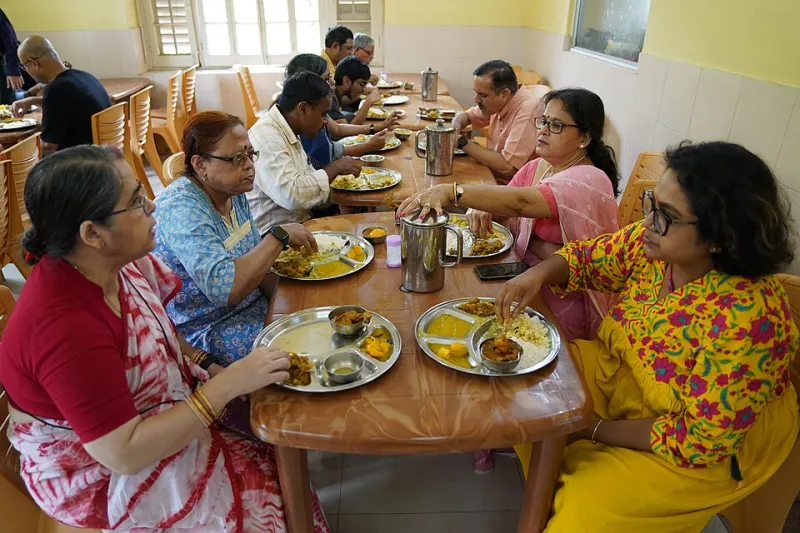
Marta runs the greengrocer on the high street. She is not at every service. She is, however, at the Sunday lunch club most months, usually with a crate of fruit that is slightly too ripe to sell but perfectly good to eat.
‘You learn things at a table,’ she says. ‘You learn who is poorly. You learn who has just moved in. You learn who needs a bag of apples. I am not a counsellor. I am a shopkeeper. But I can listen, and I can bring fruit.’
For Marta, the church is part of the local economy of kindness. She has seen people come into the shop because they met someone at lunch. She has seen volunteers carry bags home for neighbours. ‘It is not complicated,’ she says. ‘A church should know its street. Ours does.’
Femi, volunteer: ‘I came to help; I stayed because people helped me’
Femi moved to London from Manchester for work and spent his first six months in the city feeling like a visitor. He started volunteering on the coffee rota because he wanted to meet people without having to make small talk at a party.
‘I thought volunteering was a one-way street,’ he says. ‘I would give my time, they would get their coffee. But then I had a bad week, and someone noticed. Someone asked if I was all right. That was the moment it became my church, not just a place I helped at.’
He now runs the washing-up rota for the lunch club. He is cheerful about it. ‘Everyone says washing up is the worst job. It is not. You get the best conversations over the sink. You also get first pick of the cake.’
Leah, student: ‘It’s the only place in London where no one asks what I’m doing with my degree’
Leah is studying at a London university and came to St Margaret's for a free supper during her first term. She was lonely in halls. She was also unsure about faith. She kept coming because the welcome was warm without being pushy.
‘I do not have everything worked out,’ she says. ‘I am not sure what I believe. But no one here has asked me to pretend otherwise. They ask me how my week has been. They ask if I want another biscuit. That is enough for now.’
She helps with the church's social media, which means she spends a lot of time photographing tea cups. She says the church has become a fixed point in a city that can feel very loose. ‘I know I can turn up on a Sunday and someone will say hello. That is not a small thing when you are twenty.’
What the five have in common
The details are different: a buggy, a crate of apples, a washing-up rota, a crayon box. But the shape of the story is the same. People came for one reason and stayed for another. They came for quiet, or coffee, or company, or a free supper. They stayed because they were noticed.
That is not the same as saying everything is perfect. St Margaret's is a parish like any other: there are rota gaps, awkward moments and the occasional disagreement about the best way to stack chairs. But the five voices here point to something durable. A church community is not a club with a membership card. It is a network of neighbours who learn each other's names.
If you are new, you do not need to arrive with a speech. You can arrive with a question, a buggy, a bag of apples or nothing at all. The table at the back has a chair. The urn is usually working. And someone will probably ask if you want a cup of tea.