Gloriously Blank: Why St Margaret’s Is Keeping Sunday Afternoon Empty (On Purpose)

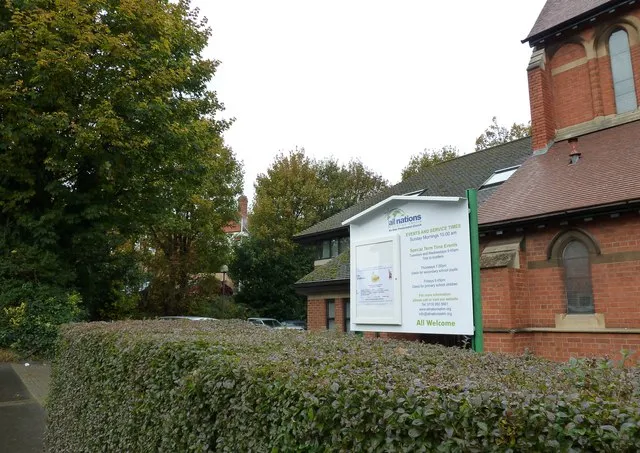
Photo: Richard Webb , CC BY-SA 2.0, via Wikimedia Commons
The hall door is propped open at ten to two. Inside, the urn is making the noise urns make, a plate of biscuits is doing its best, and someone has put out the good Scrabble set — the one with the missing E that everybody argues about. There is no sign-up sheet. There is no talk, no slideshow, no guided discussion, no “quick icebreaker before we begin”. There is simply a room, a chair with your name on it (metaphorically; we haven’t gone that far), and two hours in which nothing is expected of you.
It is, by London standards, a slightly outrageous idea.
The radical part is that there is no plan
We are a city that likes a running order. Even our leisure time arrives with a schedule attached — the 7am run club, the 11am brunch booking, the 3pm gallery slot, the evening class that promised to teach us pottery in six weeks. Rest, when we get it, often comes with an app and a target.
So when the idea of a Sunday-afternoon hall drop-in came up at St Margaret’s, the temptation was to fill it. A short reflection at half past two. A jigsaw table with a theme. Perhaps a visiting speaker on something worthy. All of it well-meant, and all of it, in the end, quietly set aside.
What we settled on instead is this: the hall opens at two, the kettle goes on, and nothing else happens unless it happens by itself. No agenda. No expectation beyond a cup of tea and a chair. If you come in, sit down, drink your tea and leave after twenty minutes without speaking to a soul, that counts as a perfectly good afternoon here.
Why an empty Sunday is starting to feel like a necessity
Most of us can name the last time we were genuinely bored — properly, aimlessly, pleasantly bored — and it is usually a while ago. The gaps in the week have a habit of being quietly colonised: a message to answer, a supermarket order to assemble, a child’s kit to wash, a work email that could technically wait until Monday but somehow doesn’t.
Community life has followed the same pattern. We are good at gathering people for something. We are much less practised at gathering people for nothing in particular. And yet the conversations people remember tend to happen in the margins — the ten minutes after the service, the queue for the coffee, the bit where the meeting has ended but nobody has quite left yet.
That is, in a small way, what this drop-in is trying to protect. Not friendship as an event to be organised, but friendship as something that can only really grow in unclaimed time. You cannot schedule the moment two strangers discover they grew up three streets apart. You can only leave a chair free and hope.
What actually happens between two and four
Ask five people and you will get five different accounts, which is rather the point.
Last month, a teenager taught a retired primary school teacher a card game she had learned on holiday, and the pair of them got thoroughly beaten by a nine-year-old who had been reading the rules upside down. Somebody brought in a stack of old newspapers from the recycling and three people spent forty minutes reading the obituaries aloud and disagreeing, warmly, about whether the crossword had got easier. A man popped in to ask for directions to the bus stop, accepted a cup of tea while he checked his phone, and stayed until half three talking about his allotment.
In the corner by the window there is what we have started calling the quiet end — a couple of armchairs, a lamp, and an unspoken agreement that nobody will be talked at there. It is where the people come who want company without conversation, which is a very London sort of need and one we don’t often make room for.
Nothing about any of this would make a good photograph. That is rather the point too.
The small theology of wasting time together
There is a long tradition of this sort of thing, though we are not going to make a fuss about it on a Sunday afternoon. Hospitality in the Christian story is rarely efficient. It looks like a spare room, a longer meal than necessary, a conversation that goes nowhere in particular. Sabbath, at its best, is not a reward for finishing your list — it is a refusal to let the list have the last word.
You don’t need to believe any of that to come and sit down. But if you do, you may find that an afternoon with no programme is a rather good place to notice that you are not, in fact, the one holding everything together.
A few things worth knowing before you come
- You do not need to stay the whole time. Twenty minutes is a fine visit.
- You do not need to bring anything, know anyone, or be good at games.
- Nobody will ask you to join in. If you would rather read, read.
- The tea is proper tea, in mugs, with milk available.
- Children are welcome, and so is the noise they make.
- If you are unsure, sit by the window. Someone will come and say hello, and then they will leave you alone.
The hall is open on Sunday afternoons, two until four, through the autumn and into Advent. You will find the door on the side, the one that sticks slightly. Push it. The kettle is already on.
And if you spend the whole two hours doing nothing at all, in the company of a few other people doing the same — well, that is not a failure of the afternoon. That is the afternoon.